
David Kinley
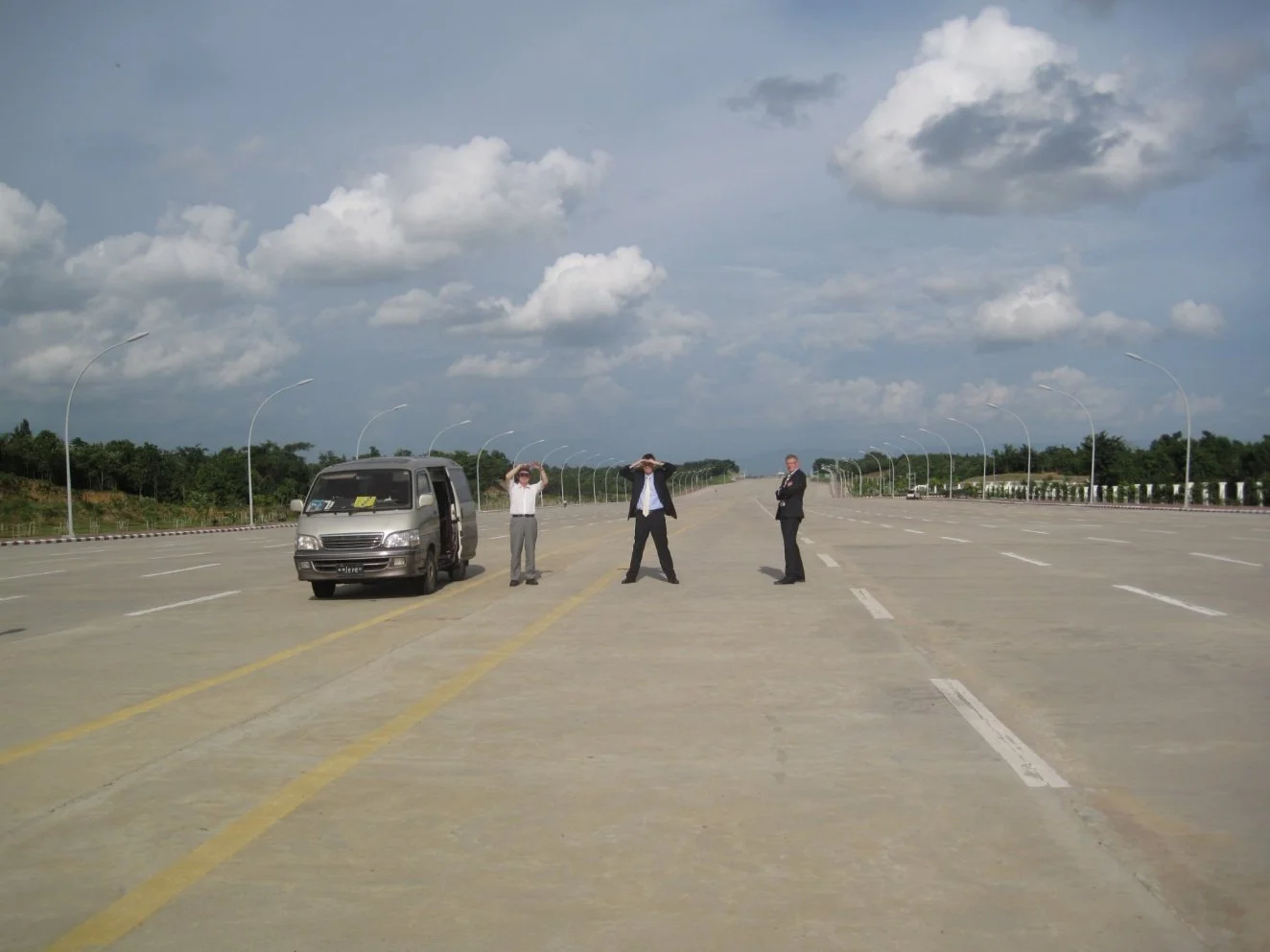
L to R: Trevor Wilson, Australian Ambassador to Myanmar; Paul Verwoert, Project Manager; David Kinley, Delegation Lead.
The image is of an arterial road in Myanmar’s then newly inaugurated capital, Naypyidaw, mid-morning on a weekday in late August 2012. Our little delegation had been commissioned by Australia’s Foreign Minister Bob Carr to scope possible pathways to promote human rights in Myanmar. The photograph was taken on our way to meet the National League of Democracy’s leader Daw Aung San Suu Kyi who had been released from detention following the military junta’s relaxation of authoritarian rule a year earlier. We had been driving on this road for several minutes without seeing another vehicle, so we decided to stop and record the event. The photographer was our fixer, Eugene Quah. Dubbed a ‘ghost city’, Naypyidaw had replaced Yangon as the nation’s capital a few years earlier in 2005, seemingly as much on an astrological whim of the country’s leader Senior General Than Shwe as for reasons of security. This empty 18-lane highway built with Chinese funding is a striking example of grandiose waste of international development aid in one of the world’s poorest and most conflict-riven states.
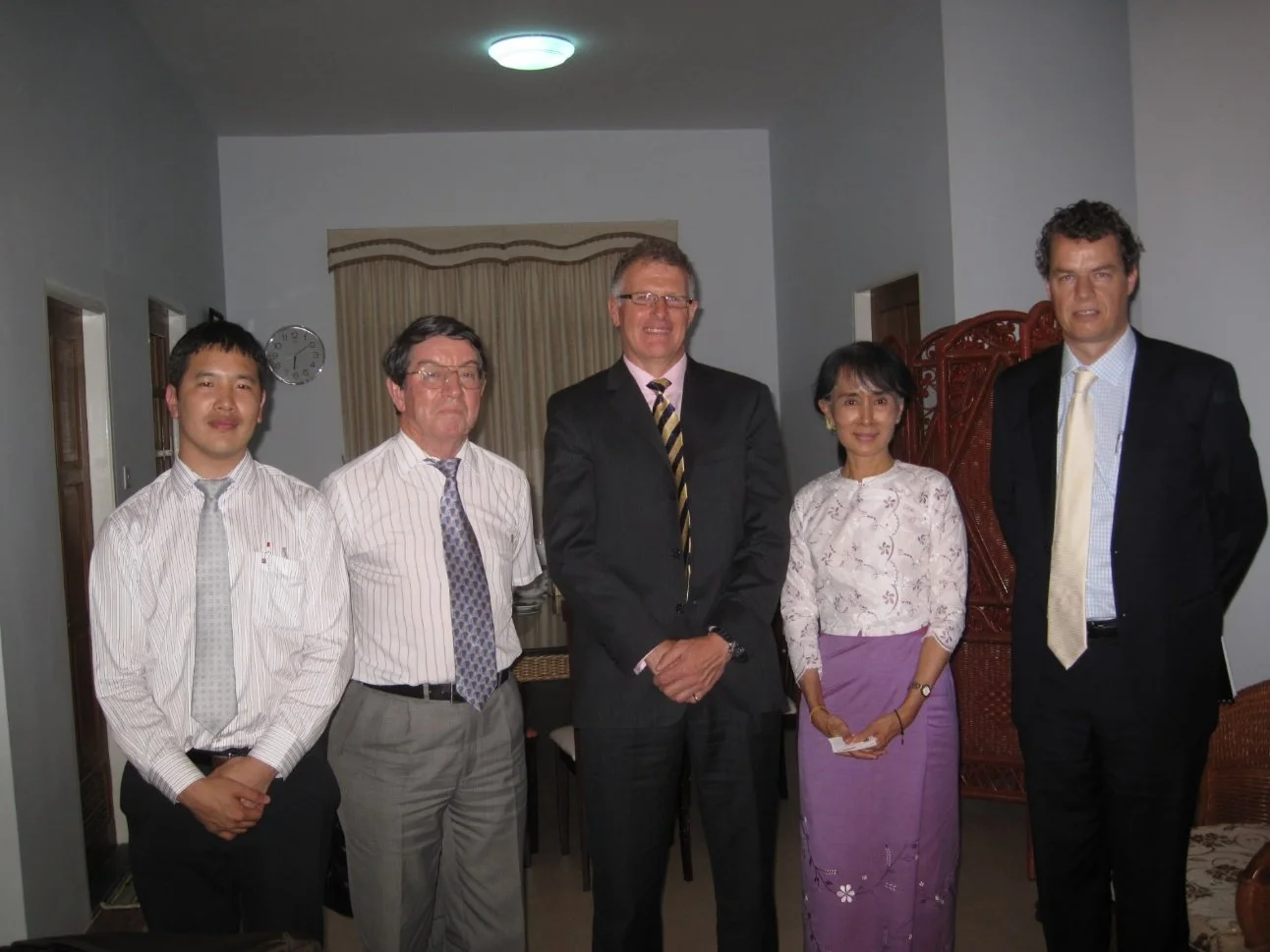
L to R: Eugene Quah, Trevor Wilson, David Kinley, Aung San Suu Kyi, Paul Verwoert. Taken in Suu Kyi’s home following our meeting with her, as mentioned above.
The meeting yielded one anecdote which, on reflection, foreshadowed Suu Kyi’s fate nine years later when she was once again arrested. She has been detained ever since. David Kinley relates this particular story in his 2024 Liberty Paradox book as follows:
“During one of my trips to Myanmar, this one in 2012, I met with Aung San Suu Kyi in her new home in the newly established capital of Naypyidaw. It was a year or so after she had been officially released from long-term house arrest, and she was in a relaxed mood. We sat at her kitchen table, and as she poured tea, I ventured some small talk. Nodding to the puppy who had so enthusiastically greeted us at the door, I asked whether she was having fun with him. “Oh yes,” she replied, “and he chews my copy of the new Constitution, you know, so he’s clearly very intelligent!” Section 59(f) of the Constitution of Myanmar (2008) effectively bars Suu Kyi from ever being elected president of Myanmar. Inserted with her specifically in mind, the provision stipulates that no person married to a foreign national or having children who hold another nationality (she fell into both categories), is eligible for election to the presidency. That said—and reflecting the flexibility of constitutions in matters of liberty when there is sufficient public trust and political will (and a prescient pooch)—Aung San Suu Kyi was for some time president in all but name, being both foreign minister and minister of the president’s office, until the military coup in February 2021, whereupon she found herself once again incarcerated by Myanmar’s generals.”